
Bidirectional DC-DC Converters in Virtual Power Plants: The Art of Coordinating Distributed Energy Resources
Amidst the global wave of energy transition, the penetration of Distributed Energy Resources (DERs) such as photovoltaic (PV) power generation, energy storage batteries, and electric vehicles (EVs) continues to rise.
lcxpower.com
4/25/20265 min read
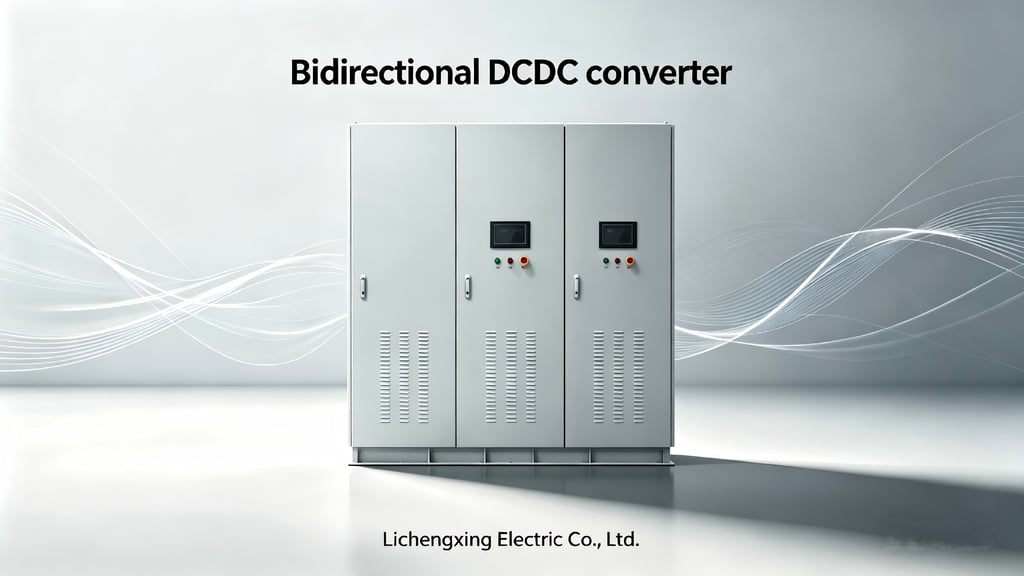
Amidst the global wave of energy transition, the penetration of Distributed Energy Resources (DERs) such as photovoltaic (PV) power generation, energy storage batteries, and electric vehicles (EVs) continues to rise. However, their intermittent and decentralized nature poses challenges to the stable operation of the power grid. Virtual Power Plants (VPPs) integrate distributed energy, controllable loads, and energy storage systems to achieve "aggregating sand into a tower" for large-scale regulation. They have become the core carrier for grid peak shaving and valley filling, as well as the accommodation of new energy.
The bidirectional DC-DC converter, serving as the key interface equipment connecting different voltage levels and types of distributed resources, plays a decisive role in the energy utilization efficiency and regulation response speed of a VPP. This article delves into the core role, application scenarios, key technologies, and future development directions of bidirectional DC-DC converters in the coordination of distributed energy resources within virtual power plants.
Core Logic: The Bidirectional DC-DC Converter as the "Energy Hub"
The core value of a VPP lies in breaking the isolated state of distributed energy and realizing energy synergy across equipment and scenarios. The unique advantages of bidirectional DC-DC converters make them the core nodes in this synergy:
· Bidirectional Energy Flow: Distinct from unidirectional DC-DC converters that only allow single-direction power transmission, bidirectional DC-DC converters can flexibly control the bidirectional flow of energy between distributed resources and the grid/load. They can store PV and wind power in batteries, feed stored energy back to the grid during peak hours, or charge/discharge electric vehicles.
· Voltage Level Adaptation: The output voltages of distributed energy sources vary significantly (e.g., PV module output is 200-800V, energy storage battery packs are 400-1500V, and EV traction batteries are 300-800V). Bidirectional DC-DC converters enable seamless connection of equipment with different voltage levels through wide-range voltage transformation, eliminating the need for additional step-up/step-down equipment.
· Precise Power Regulation: By adjusting the converter's operating mode (Buck/Boost) in real-time, the direction and magnitude of power transmission can be precisely controlled, providing hardware support for the精细化 (fine-grained) scheduling of the VPP.
Typical Application Scenarios: From "Single-Point Optimization" to "Global Synergy"
Bidirectional DC-DC converters cover the full lifecycle management of distributed energy in VPPs. The following are three core application scenarios:
1. PV + Energy Storage Synergistic Accommodation
PV power generation is highly intermittent; excess power often leads to "curtailment" during sunny days, while there is no output at night. Bidirectional DC-DC converters achieve synergy through:
· Daytime Charging Mode: When PV output exceeds local load, the converter operates in Boost mode, stepping up the PV power to store it in energy storage batteries, avoiding waste.
· Nighttime Discharging Mode: When PV output is insufficient, the converter switches to Buck mode, stepping down the high-voltage energy from batteries to supply the load or feed back to the grid.
· Dynamic Tracking: Real-time monitoring of PV output, load demand, and Storage SOC (State of Charge) allows for automatic adjustment of power transmission rates, ensuring maximized PV utilization.
2. EV V2G (Vehicle-to-Grid) Integration
As mobile storage units, the large-scale integration of EVs provides a vast amount of dispatchable resources for VPPs. The bidirectional DC-DC converter is the core of V2G systems:
· Peak-Valley Arbitrage: During grid valley periods (e.g., night), the converter works in Buck mode to charge the traction battery; during peak periods (e.g., day), it switches to Boost mode to feed energy back to the grid for price differential revenue.
· Emergency Power Supply: In case of grid failure or local outages, the converter quickly switches to off-grid mode, supplying the EV's energy to campus loads to enhance reliability.
· Cluster Control: The VPP platform coordinates hundreds of EV bidirectional DC-DC converters through unified dispatch to achieve large-scale power regulation and participate in grid frequency and peak regulation.
3. Microgrid Islanded/Grid-Connected Mode Switching
Microgrids within a VPP must flexibly switch between islanded and grid-connected modes based on grid status. Bidirectional DC-DC converters play a key role here:
· Grid-Connected Mode: The converter acts as the interface between the microgrid and the main grid, balancing internal generation and load, sending excess power to the main grid, or drawing from it to cover deficits.
· Islanded Mode: When the main grid fails, the converter quickly disconnects and switches to independent control mode, coordinating the power balance of PV, storage, and loads to maintain voltage and frequency stability.
· Seamless Switching: Through the converter's fast response control, millisecond-level switching between modes is achieved, avoiding load interruption or equipment damage.
Key Technologies: Core Capabilities Supporting Efficient Coordination
The coordination performance of bidirectional DC-DC converters relies on four key technological breakthroughs:
· Wide-Range Voltage Adaptation Technology: Distributed energy output voltages fluctuate widely (e.g., PV open-circuit vs. operating voltage differences can reach 30%). By adopting multi-level topologies (such as three-level bidirectional converters), wide-range input/output voltage coverage is achieved while reducing switch voltage stress and improving efficiency.
· Fast Response Control Strategies: VPP dispatch requires millisecond-level power adjustments. By introducing advanced algorithms like Model Predictive Control (MPC) and Sliding Mode Control, combined with FPGA real-time computing, response times are compressed from tens of milliseconds to 1-5 milliseconds.
· Multi-Device Cooperative Scheduling: To coordinate dozens to hundreds of converters, a hierarchical control architecture is used (local regulation vs. global optimization). Converters support "Plug and Play" via standard protocols (Modbus TCP, MQTT) and feature fault self-healing, where the platform automatically redistributes power if a unit fails.
· Low Loss and High Reliability Design: To meet high efficiency demands, Wide Bandgap (WBG) devices like SiC MOSFETs replace traditional IGBTs, reducing switching losses by over 80% and achieving >98% efficiency. Thermal management is optimized via liquid cooling, and key components feature redundancy to improve MTBF.
Case Study: Application Results in an Industrial Park VPP
A domestic industrial park VPP integrated 10MW of PV, a 5MW/10MWh energy storage system, and 200 EV charging piles, using bidirectional DC-DC converters as core equipment. After one year of operation, the results were significant:
· New Energy Accommodation: PV utilization rose from 75% to 98%, completely solving the "curtailment" issue.
· Peak-Valley Reduction: Through storage and V2G synergy, the peak-valley load difference dropped from 8MW to 3MW, reducing grid expansion pressure.
· Economic Benefits: Through peak-valley arbitrage and grid ancillary services, annual revenue increased by over 2 million RMB.
· Reliability: Islanded switching time was <5ms, reducing annual outage time from 24 hours to under 0.5 hours.
Challenges and Outlook
Despite the success, challenges remain:
· High Cost: WBG devices and advanced controls make converters 30%-50% more expensive than unidirectional ones.
· Standardization: Lack of unified communication protocols and interfaces increases integration difficulty.
· Communication Latency: Large-scale cluster scheduling can suffer from instruction deviation due to network delays.
Future Development:
· SiC/GaN Popularization: Further improving efficiency and power density while lowering costs.
· AI Optimization: Using AI for autonomous learning and global synergy optimization.
· Deep Grid Interaction: Supporting advanced services like primary frequency regulation and black start.
Conclusion
As the "energy hub" of Virtual Power Plants, bidirectional DC-DC converters provide key support for new energy accommodation, grid stability, and cost optimization by enabling flexible coordination of distributed energy. As the energy transition deepens, these converters will deeply integrate with VPP platforms and distributed equipment to build a smarter, more efficient, and reliable energy ecosystem, driving the industry toward a "clean, intelligent, and decentralized" future.