
Export of Variable Frequency Power Supplies: Lichenxing's Solution Achieves Seamless Voltage Switching
Africa's manufacturing sector is experiencing rapid growth, driving strong demand for automated production lines. However, the reality of varying voltage standards and inconsistent grid quality across African countries poses significant challenges to the stable operation of automated equipment. From 400V in South Africa to 415V in Nigeria, from 380V in Egypt to 240V in Kenya, standardized solutions struggle to meet such diverse needs.
lcxpower.com
3/27/20263 min read
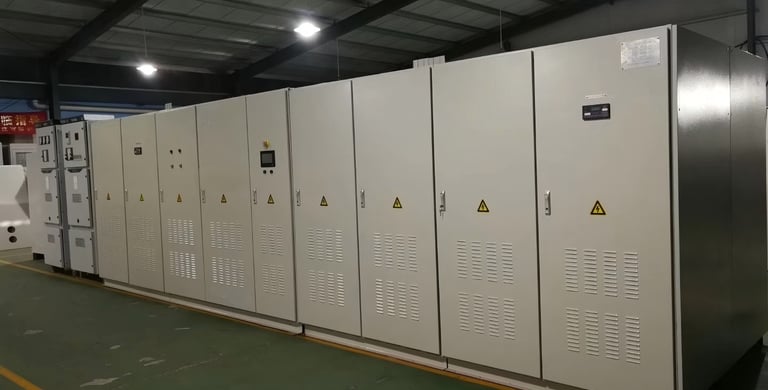
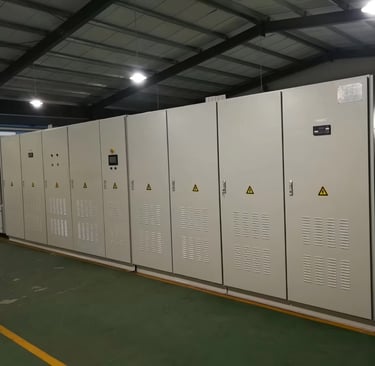
Africa's manufacturing sector is experiencing rapid growth, driving strong demand for automated production lines. However, the reality of varying voltage standards and inconsistent grid quality across African countries poses significant challenges to the stable operation of automated equipment. From 400V in South Africa to 415V in Nigeria, from 380V in Egypt to 240V in Kenya, standardized solutions struggle to meet such diverse needs.
The Challenge of African Voltage Diversity
The voltage standards across the African continent are arguably the most complex in the world: Commonwealth countries mostly adopt the 240V/415V system, French-speaking regions favor 220V/380V, while former Portuguese colonies follow 230V/400V standards. Furthermore, actual voltages in many areas deviate greatly from nominal values; rural areas might see voltages as low as 180V, while urban industrial zones can reach as high as 450V.
Lichenxing's Innovative Solution
An adaptive voltage switching system has been developed, with core technologies including:
Intelligent Identification Module: Automatically detects input voltage parameters.
Matrix Transformer Group: Achieves multi-voltage level output.
Seamless Switching Technology: Switching time is less than 10ms.
Intelligent Filtering System: Dynamically eliminates harmonic interference.
Special Requirements of Automated Production Lines
Modern automated production lines have extremely high requirements for power quality: robots need stable voltage to guarantee repeat positioning accuracy, vision systems are sensitive to voltage fluctuations, and conveyor belt synchronization requires frequency stability. A typical problem encountered by an automotive assembly line in Nigeria illustrates this well: voltage fluctuations caused positioning deviations in welding robots, resulting in a body seam defect rate as high as 15%
Energy Efficiency Optimization Features
The system integrates an energy efficiency management module that:
Automatically adjusts operating modes based on load changes.
Dynamically compensates for power factor, maintaining it above 0.95.
Manages harmonics, keeping total harmonic distortion below 5%.
Operates in energy-saving mode, reducing standby power consumption by 80%.
Environmental Adaptability Design
African environmental conditions are diverse: hot and dry in the Sahara region, hot and humid in the Congo Basin, and corrosive salt in coastal areas. Equipment features IP55 protection rating, specially designed cooling systems, and anti-corrosion treatment compliant with C5-M standards.
Localized Service Network
A service network has been established in major African industrial nations, with technical centers in South Africa, Nigeria, Egypt, and Kenya. Mobile service vehicles provide on-site support, and local technicians are trained to improve response speed.
Actual Application Results
System operation data from an automotive plant in Johannesburg, South Africa, is satisfactory: voltage stability remains within ±2%, and frequency deviation is less than ±0.2Hz. Equipment availability on the production line increased from 88% to 99%, and product defect rates dropped by 3 percentage points.
Industry Application Cases
Successful applications span multiple industries:
Automotive manufacturing: welding, painting, and final assembly lines.
Electronics manufacturing: SMT production lines.
Food processing: packaging lines.
Pharmaceutical industry: cleanroom production lines.
Economic Benefit Analysis
The system typically has an investment payback period of 12–18 months, primarily achieved through improved production efficiency and reduced maintenance costs. Calculations from an electronics factory show that system investment was fully recovered within 14 months through reduced downtime losses.
Risk Management Strategies
Recommended risk management measures include:
Insurance for grid quality assessment.
Configuration of backup power systems.
Dual power supply for critical equipment.
Regular preventive maintenance.
Safety Certifications
Products have passed multiple international certifications:
IEC standard certification, meeting requirements in most African countries.
Explosion-proof certification for hazardous areas.
Environmental certification, satisfying export requirements.
Installation and Implementation Experience
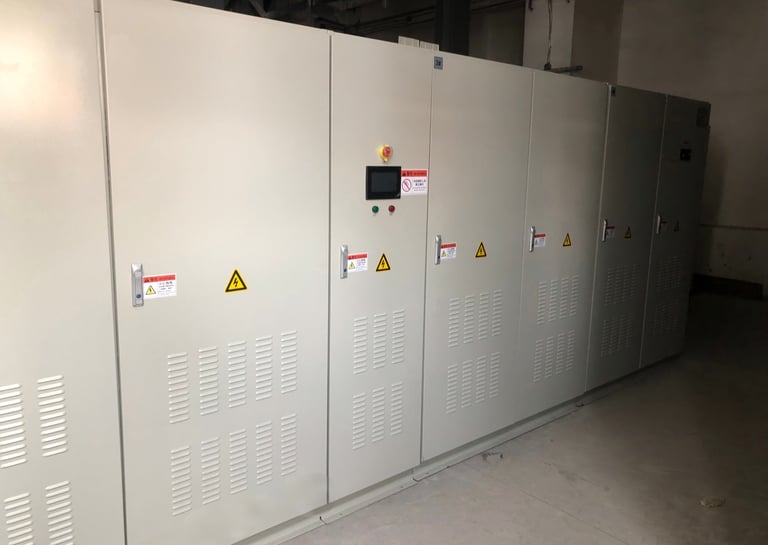
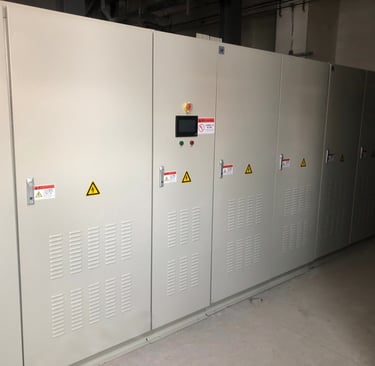
Key factors for successful installation include:
Detailed on-site investigation during the前期 phase.
Rational system design.
Professional installation team.
Comprehensive commissioning process.
Adequate user training.
Maintenance Management Recommendations
Recommended maintenance schedule:
Daily checks of operating status.
Monthly inspection of connections and cooling.
Quarterly testing of protection functions.
Annual comprehensive inspection and maintenance.
The African automation market holds immense potential, but also presents many technical challenges. Professional power solutions are a crucial guarantee for successful project implementation.
Key Success Factors
Successful project implementation requires:
Full customer participation.
Accurate needs analysis.
Appropriate technical solution.
Professional implementation team.
Comprehensive after-sales service.
Technology Development Trends
New technologies currently under development include:
Artificial intelligence for optimizing operating parameters.
Digital twin technology for simulating operating states.
Blockchain for recording maintenance history.
Predictive maintenance to reduce downtime.