
How to Troubleshoot and Repair Your Inverter: A Professional Guide
Even the most robust power systems can encounter issues from time to time. When your inverter stops working, it can be a source of great stress, especially if you rely on it for critical operations.
12/5/20253 min read
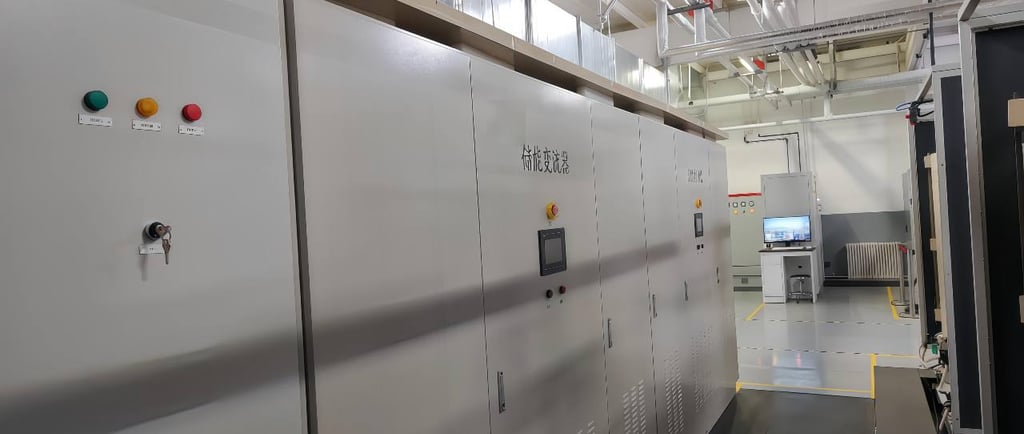
Even the most robust power systems can encounter issues from time to time. When your inverter stops working, it can be a source of great stress, especially if you rely on it for critical operations.
At lcxpower.com, we believe that understanding basic troubleshooting can save you time and money. However, it is equally important to know when a problem requires professional intervention.
This guide will walk you through safe troubleshooting steps, highlight the importance of reliable equipment, and explain why choosing a trusted brand is the best insurance against downtime.
Safety First: The Golden Rules
Before you attempt any inspection, safety must be your top priority.
1.Disconnect Power: Always disconnect both the DC input (batteries/solar panels) and AC output (loads/grid).
2.Capacitor Discharge: Inverters contain capacitors that store high voltage even after power-off. Wait at least 5 minutes after disconnecting power before opening the cover or touching any components.
3.Use Insulated Tools: Always wear insulated gloves and use insulated tools to prevent electric shock.
Step 1: The "Easy Wins" – External Checks
Often, the problem lies not within the inverter itself, but in its connections or power source. Start with these simple checks:
1. Check Cable Connections (Input/Output)
Loose terminals are one of the most common causes of failure.
●Visual Inspection: Look for loose, oxidized, or corroded terminals on both the DC input and AC output sides.
●Tighten Connections: Ensure all screws are securely fastened. If there is oxidation (rust), clean the terminals with sandpaper or a wire brush to ensure a solid connection.
2. Is the Battery Dead?
A "faulty" inverter is often just reacting to a lack of power.
●Check Voltage: Use a multimeter to measure the battery voltage.
●Low Voltage: If the battery voltage is too low (under-voltage), the inverter will shut down to protect the battery. Recharge the battery and see if the inverter powers on.
●Faulty Cells: If the battery is old, it might have dead cells that cannot hold a charge, tricking the inverter into thinking there is a system fault.
3. Check Fuses and Breakers
Inspect the fuses on both the input and output lines. A blown fuse is a quick and easy fix. If the fuse blows again immediately, there is a deeper short-circuit issue that requires professional diagnosis.
Step 2: Internal Issues – When to Call the Experts
If the external connections and batteries are fine, the issue might be internal. We strongly advise against non-professionals attempting to repair internal components.
1. Why DIY Internal Repairs are Risky
●High Voltage Risk: As mentioned, capacitors can retain lethal voltages.
●Complex Circuitry: Modern inverters contain sensitive PWM control chips, MOSFETs, and IGBTs. Incorrect soldering or component replacement can cause a cascade of failures.
●Voided Warranty: Opening the unit or attempting a repair often voids the manufacturer's warranty.
2. The Right Approach: Manufacturer Maintenance
If you suspect an internal fault (e.g., burnt smell, visible damage to capacitors, or error codes indicating hardware failure), the correct procedure is:
●Contact Support: Reach out to the manufacturer's technical support.
●Authorized Service: Arrange for the unit to be sent to an authorized service center. Professional technicians have the schematics, diagnostic tools (like oscilloscopes), and genuine spare parts needed to fix the unit safely and effectively.
Prevention is Better than Cure: Choose a Reliable Supplier
The best way to minimize repairs is to buy a high-quality inverter from the start. A reliable inverter should run silently and efficiently for years with minimal maintenance.
This is where lcxpower.com stands apart.
Why Choose lcxpower.com?
When you purchase from lcxpower.com, you are not just buying a box; you are investing in peace of mind.
●Built for Reliability: Our inverters are engineered with high-grade components and rigorous quality control. We design our products (including our specialized Industrial Frequency and Off-Grid models) to withstand harsh environments, reducing the likelihood of failure.
●Global Support: We stand by our products. If an issue does arise, our professional support team is ready to assist with troubleshooting and warranty service.
●Comprehensive Protection: Our units come with built-in protections against over-voltage, over-current, short-circuit, and over-temperature, acting as a shield for both your inverter and your connected devices.
Conclusion
While checking cables and batteries is something any user can do, inverter repair is a job for professionals. By following the "external first, internal never (without training)" rule, you can diagnose many common issues safely.
For those looking to avoid frequent breakdowns and costly repairs, the solution is simple: Choose reliability.
Power your world with confidence. Visit https://lcxpower.com today to explore our range of robust, high-performance inverters designed to deliver uninterrupted power, year after year.
lcxpower.com: Where Quality Meets Reliability.