DC Power Supply
Product Overview:
LCX Power-TDC is an industrial programmable DC power supply developed by LCX.
Adopting fully digital control topology, it features continuously adjustable output voltage and current, supporting constant voltage (CV) and constant current (CC) dual operating modes.
With wide power range, it allows series & parallel connection for capacity expansion. It delivers low output ripple and fast response with high stability and reliability.
Rack-mounted design and comprehensive protection circuits are integrated. Suitable for R&D laboratory, production burn-in test, new energy component test and industrial DC power supply.
It can support overseas export projects and remote PC control via communication interfaces.


Typical Applications:
1. New energy industry: Testing and burn-in of battery cells, BMS, DC loads and PV components
2. Industrial electronics: Burn-in test for controllers, relays, sensors and PCB boards
3. Research laboratories: Electrical performance test for universities and certification institutes
4. DC power supply and performance verification for rail, marine and aerospace components
5. ATE automatic test system integration and production fixture power supply
6. On-site DC power supply & commissioning for telecom equipment and off-grid sites
Technical Features:
1. Digital DSP control, auto switching between CV and CC, high-precision adjustable voltage & current
2. Wide AC input range, customizable power rating, master-slave series/parallel expansion
3. Low output ripple & noise, high output accuracy, fast dynamic response
4. Full protection: OVP, OCP, OTP, SCP and reverse connection protection
5. Standard RS485/RS232; optional LAN & USB, supporting SCPI protocol for PC remote control
6. High-definition display, local knob & button operation, parameter save & recall function
7. Modular rack design with optimized cooling, stable continuous full-load operation
8. Compliant with CE safety and EMC standards, ready for export projects


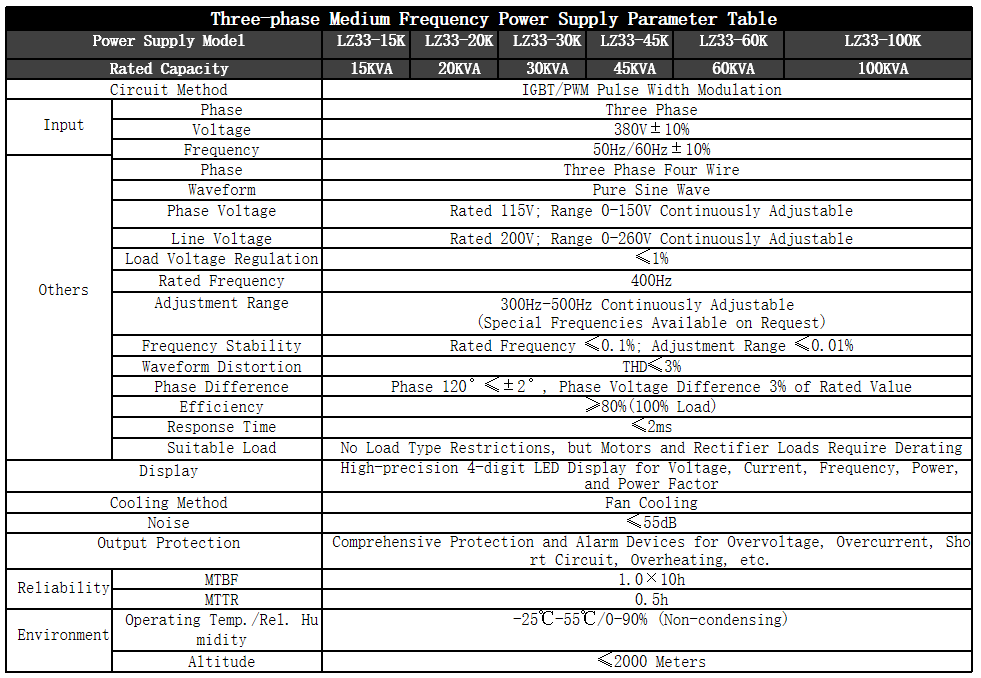
Technical Parameters and Selection
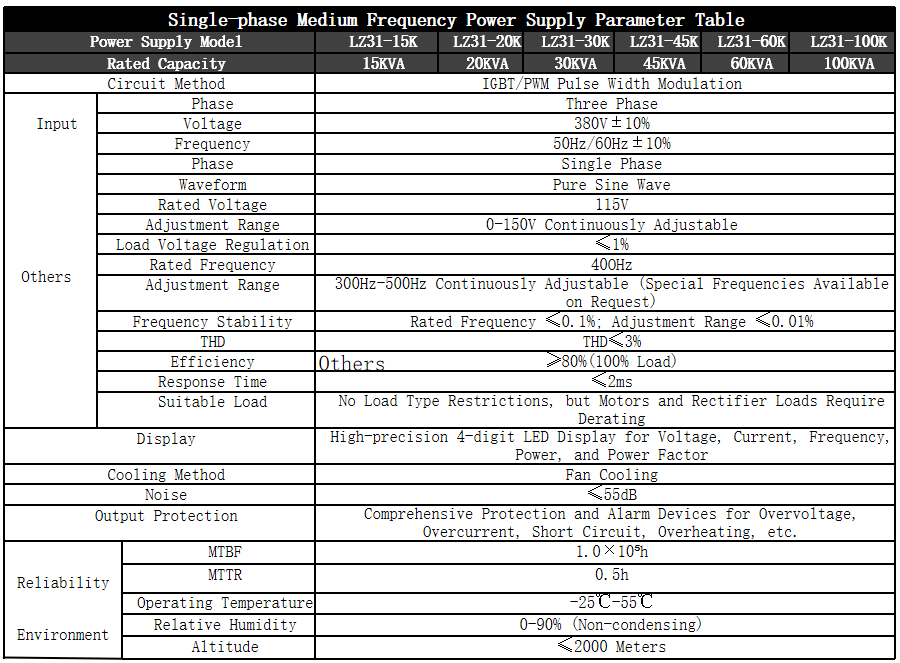
Technical Parameters and Selection